
Florida homeowners replacing a front door are usually choosing between two materials: fiberglass and steel. For many Gulf Coast homes, fiberglass offers better moisture resistance and lower routine maintenance, while steel remains a strong option when strength and security come first. The better choice depends on your home’s location, coastal exposure, and what you need the door to do over the long term.
This guide compares both materials across the factors that matter most in Florida, such as humidity, salt air, energy efficiency, security, and storm readiness, so you can make a confident, informed decision before scheduling a replacement.
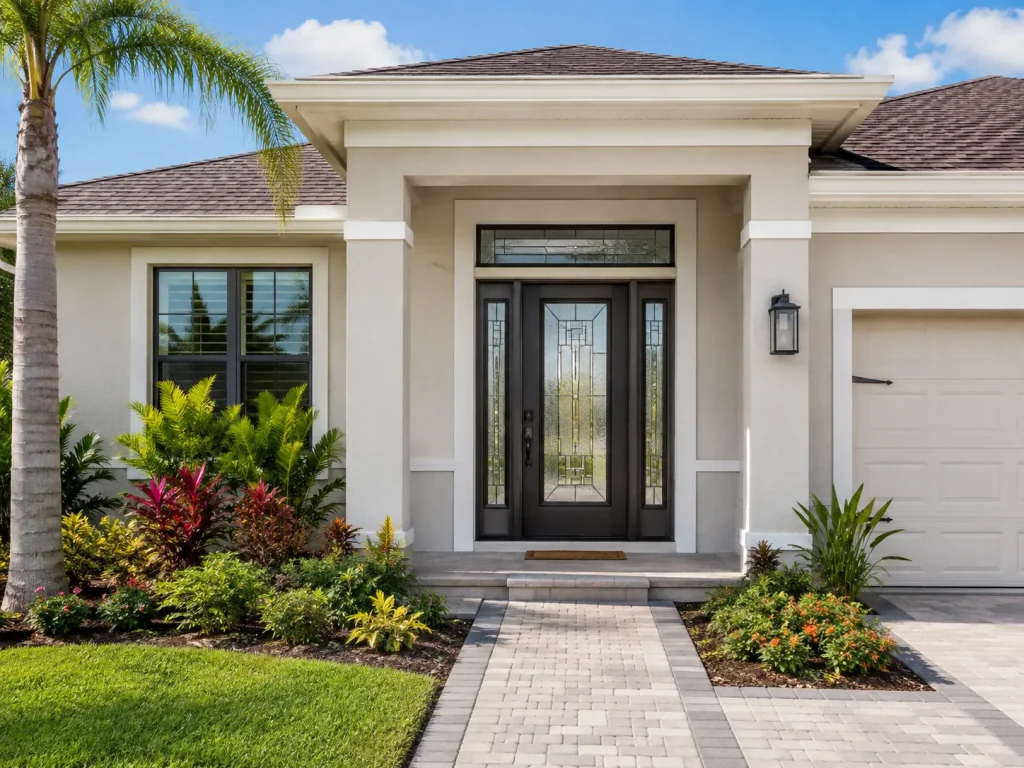
Before going into the details, here’s a side-by-side overview of how each material performs in the conditions homeowners actually face.
Factor | Fiberglass Front Door | Steel Front Door |
Florida humidity | Excellent resistance | Good if coating remains intact |
Corrosion resistance | Does not rust | Can rust if scratched or exposed |
Maintenance | Low | Moderate |
Security | Strong | Very strong |
Energy efficiency | Excellent with insulated core | Excellent with insulated core |
Coastal exposure | Usually better suited | Requires more corrosion protection |
Appearance | Wide range of styles | Clean, traditional appearance |
Dent resistance | Good | Can dent |
Heat exposure | Performs well with proper finish | Surface may become very hot |
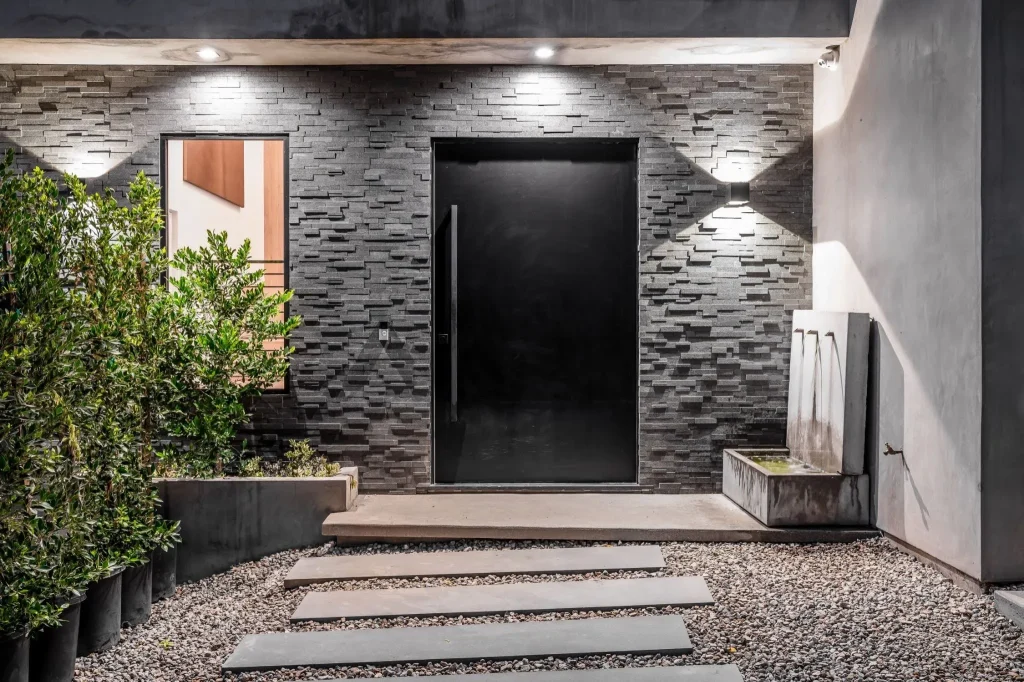
Fiberglass doesn’t rust or absorb moisture, giving it a built-in advantage during the rainy season and year-round humidity. Unlike natural wood, fiberglass won’t swell, warp, or rot when exposed to prolonged moisture. For homes in Bradenton, Sarasota, and along the Gulf Coast, that resistance matters every summer.
Florida’s sun tests finishing materials. Fiberglass doors hold up well under direct sun exposure when paired with UV-resistant finishes, but darker colors absorb more heat and can affect finish longevity. Choosing a lighter color or installing the door on a shaded facade reduces heat transfer and helps the finish last longer.
Routine upkeep for a fiberglass door is simple: clean it periodically, inspect weatherstripping and seals at the start and end of hurricane season, and touch up the finish as needed. For most homeowners, this means far less work than wood and fewer surface-integrity concerns than steel.
Key takeaway: Fiberglass is especially attractive for homeowners who want lower long-term maintenance in a hot, humid climate.

Fiberglass doesn’t rust or absorb moisture, giving it a built-in advantage during the rainy season and year-round humidity. Unlike natural wood, fiberglass won’t swell, warp, or rot when exposed to prolonged moisture. For homes in Bradenton, Sarasota, and along the Gulf Coast, that resistance matters every summer.
Florida’s sun tests finishing materials. Fiberglass doors hold up well under direct sun exposure when paired with UV-resistant finishes, but darker colors absorb more heat and can affect finish longevity. Choosing a lighter color or installing the door on a shaded facade reduces heat transfer and helps the finish last longer.
Routine upkeep for a fiberglass door is simple: clean it periodically, inspect weatherstripping and seals at the start and end of hurricane season, and touch up the finish as needed. For most homeowners, this means far less work than wood and fewer surface-integrity concerns than steel.
Key takeaway: Fiberglass is especially attractive for homeowners who want lower long-term maintenance in a hot, humid climate.
Steel has a long reputation for strength. Steel doors resist everyday impacts and handle standard wear well, making them a dependable choice when physical security is the primary concern. That said, steel skins can dent under enough force, which is worth considering if the door faces an unprotected entryway or heavy foot traffic.
Steel requires protection from moisture. A painted or coated surface shields the core, but scratches, chips, and exposed edges create pathways for moisture to reach the bare metal underneath. In Florida’s high-humidity environment, especially near the coast, those entry points can rust faster than they would in a drier climate.
Keeping a steel door performing well requires regularly inspecting the painted surface, addressing scratches and chips as soon as they appear, and paying close attention to the bottom edge, hardware, and frame areas where moisture tends to collect. Staying ahead of small problems prevents more significant corrosion issues later.
Key takeaway: Steel can perform very well, but protecting the surface finish becomes more critical and more time-sensitivein Florida conditions.
Coastal homes face salt-laden air, high humidity, frequent wind-driven rain, and accelerated corrosion of metal surfaces and hardware. For homes in communities like Longboat Key, Siesta Key, or along Sarasota Bay, these factors can meaningfully shorten the life of a door that isn’t suited for the environment.
Fiberglass won’t rust, which removes a major corrosion concern in salt-air environments. The door skin holds up well as long as you maintain the protective coating. Hardware, hinges, strike plates, and fasteners still need to be rated for coastal exposure; the door is only as durable as its complete system.
Salt air accelerates the breakdown of protective coatings on steel surfaces. Once a scratch or chip exposes bare metal in a coastal setting, rust can develop relatively quickly. Homes with significant salt-air exposure will require more frequent inspection and maintenance to keep a steel door performing as intended.
For homes facing direct coastal exposure, fiberglass is the lower-maintenance choice, provided the full door assembly uses corrosion-resistant hardware and a licensed contractor installs it.
The door frame’s strength, the depth of the strike plate, lock and deadbolt grade, hinge quality, the presence of glass panels, and installation quality all determine how well a front door resists forced entry.
Steel is known for its strength, and a high-quality steel door system installed into a reinforced frame can provide excellent residential security. But assuming that every steel door is automatically more secure than every fiberglass door is not accurate. Construction quality and installation matter just as much as the material itself.
Quality fiberglass entry doors can deliver strong residential security when paired with a reinforced frame, Grade 1 deadbolt, and multi-point locking system. A well-installed fiberglass door with proper hardware can outperform a poorly installed steel door or one set in a weak frame.
In Florida, an energy-efficient door helps keep cool air inside and reduce the strain on your AC. Both fiberglass and steel doors can provide good insulation.
Fiberglass doors with insulated polyurethane cores provide solid thermal performance. The material is less thermally conductive than exposed metal, which reduces heat transfer through the door slab. Weatherstripping, door sweeps, and proper frame sealing multiply that benefit throughout long Florida cooling seasons.
Modern insulated steel doors can match fiberglass for energy performance when well-built and properly installed. Weatherstripping, frame sealing, glass quality, and proper installation often affect energy efficiency more than the door material itself.
Both can serve as energy-efficient front doors for Florida homes when selected and installed correctly.
Door material alone does not determine hurricane performance. Homeowners sometimes assume a steel door is automatically storm-ready or that fiberglass will not hold up in a hurricane. Neither assumption is accurate.
What matters is the tested and approved door assembly, including the slab, frame, hardware, anchoring, and any glazing. The system should also carry the appropriate product approval for the home’s wind zone. Florida Product Approval listings and Miami-Dade Notice of Acceptance (NOA) documentation show which complete door systems have been tested to meet Florida Building Code requirements.
Homeowners in storm-prone areas should choose a door system based on its rated performance, not just its surface material.
Fiberglass:
Steel:
Fiberglass generally has a maintenance advantage, especially for homes in humid or coastal environments.
Fiberglass doors are available in a wide range of styles, including smooth finishes and realistic wood-grain textures that can be painted or stained to match nearly any exterior. Traditional panel configurations, craftsman profiles, and contemporary designs are all available, making fiberglass a flexible choice for most Gulf Coast homes.
Steel doors offer clean lines and a classic painted appearance. Panel configurations, both traditional and modern, are available, along with decorative glass inserts. Steel suits homes with a streamlined exterior design.
Weigh appearance alongside sun exposure, maintenance expectations, and the door’s proximity to saltwater. A beautiful finish that demands constant upkeep in the Florida climate is never the right trade-off.
No single material is correct for every Florida home. The right choice depends on where the home sits, how much maintenance the homeowner wants to take on, and what the door needs to accomplish over time.
Choose Fiberglass If You Want:
Consider Steel If You Want:
In both cases, the full door system, including the frame, hardware, installation quality, and product rating, matters as much as the material itself.
For many Gulf Coast homes, fiberglass offers an advantage in moisture resistance, corrosion protection, and lower maintenance. Steel is still a strong option for homeowners who prioritize security.
Whichever material you choose, the frame, hardware, product rating, and installation quality all affect how well the door performs in Florida’s climate.