
Every summer, Florida homeowners face the same cycle. A storm forms in the Gulf, you watch the forecast, and somewhere in the back of your mind, you know your windows are not doing enough to protect your family. That feeling does not go away just because a storm veers off course.
If cost has kept you from upgrading to impact windows or hurricane shutters, the My Safe Florida Home program deserves your full attention. This guide covers exactly how the program works, who qualifies, how much money is available, what upgrades are covered, and how to get through the application the right way.
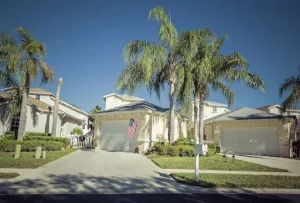
The My Safe Florida Home (MSFH) program is administered by the Florida Department of Financial Services. It has two parts: a free hurricane-mitigation inspection for eligible homeowners and a matching grant to help pay for specific upgrades the inspection recommends.
The inspection identifies how your home is currently built to resist hurricane damage and tells you exactly what improvements would make it stronger. If improvements are recommended, you can apply for grant funding to help cover the cost of implementing them.
This is not a loan. The grant reimburses you after the work is completed and inspected. It has already paid out millions of dollars to Florida homeowners in previous funding cycles, and the 2025–2026 program continues that same structure.
The program has two sets of eligibility requirements: one for the free inspection, and a stricter set for the actual grant money. Qualifying for the inspection does not automatically mean you qualify for the grant.
To qualify for the free hurricane mitigation inspection:
To qualify for the grant funding, all of the above must apply, plus:
Properties that are not eligible include condominiums, mobile homes, manufactured homes, multi-family properties, second homes, vacation homes, and rental properties.
There are two types of grants under the MSFH program, and which one you qualify for depends on your household income.
The state reimburses two-thirds of your total project costs, up to a maximum of $10,000. To receive the full $10,000, your qualifying project needs to cost at least $15,000. If your project costs less, the state covers two-thirds of the cost. You pay the remaining third and must provide a paid-in-full invoice when submitting your draw request.
Homeowners who qualify as low-income under Florida statute receive up to $10,000 with no matching funds required. Low-income homeowners do not need to provide a paid-in-full invoice and are also exempt from the $700,000 insured value requirement. To check whether your household income qualifies, visit the HUD income limits tool.
Funding is first-come, first-served. For the first 60 days of each new application period, the program prioritizes applicants based on age and income. After that window, the general pool opens. Once funding runs out, applicants are placed on a waiting list for the next cycle.

The program funds four specific types of improvements, and only improvements that are recommended in your initial inspection report are eligible. You cannot choose your own upgrades. The inspector determines what your home needs, and grant funding follows those recommendations.
This covers installing impact-rated windows, impact-rated exterior doors, hurricane shutters, and qualifying garage doors. Only the specific openings flagged in your inspection report are eligible. An opening that already has compliant protection cannot be upgraded using grant funds.
 If your home already has compliant hurricane shutters and you want impact windows instead, the grant will not cover that swap. The program funds improvements to unprotected openings, not upgrades to already-protected ones.
This strengthens how the roof trusses or rafters are connected to your home’s walls, reducing the risk that the roof will separate from the structure during a hurricane. New connectors must be installed on every truss or rafter to qualify for the windstorm mitigation credit. This can sometimes be done without replacing the roof, through the attic, or by accessing the soffit area.
This involves adding or upgrading the nails that hold the roof sheathing to the trusses or rafters. Better fastening reduces the chance that the roof decking blows off during a storm. When a roof is installed according to the current Florida Building Code, this is typically included automatically.
This is a self-adhering underlayment applied directly to the roof decking that prevents water from entering the home if the outer roof covering is damaged during a storm. It can be applied at the time of a full roof replacement or, if the roof is staying, from inside the attic using a closed-cell spray foam adhesive on all seams and joints.
Hot mop, tar, felt, and non-self-adhering underlayments do not qualify as Secondary Water Resistance. Make sure your contractor understands what the program requires before any work begins.
If a contractor needs to remove the roof covering to complete any recommended improvement, the program will include the cost of replacing the entire roof covering in the eligible project costs. Partial roof repairs are not covered.
The free hurricane mitigation inspection is the starting point for everything. You cannot apply for a grant without it, and it has genuine value on its own, even if grant funding is unavailable.
A state-assigned inspector visits your home and evaluates the hurricane-resistant features already in place. The inspection typically takes about one hour. The inspector looks at your roof type and coverings, how the roof is attached to the walls, how your windows and doors are protected, and the overall construction of your home. None of this is a pass or fail evaluation. It is a documentation of what your home currently has and what it is missing.
Within 14 days of the inspection, the report is uploaded to the MSFH applicant portal. The report includes recommended improvements, cost estimates for a typical home, and a completed Form OIR-B1-1802, the standard wind mitigation form that Florida insurers use to calculate premium discounts.
That form matters regardless of the grant. When you send it to your insurance company, they are required by Florida law to apply any applicable wind mitigation credits to your policy. Homeowners in high-wind areas like Sarasota, Bradenton, and Venice frequently see meaningful annual savings just from submitting that form, even before a single improvement is made.
The program follows a specific eight-step sequence. Work cannot begin until full grant approval is in place, and each step has to be completed before moving to the next. Getting the order wrong will disqualify your project from reimbursement.
Step 1: Apply for the free hurricane mitigation inspection
Submit your inspection application at mysafeflhome.com. You will need your name, address, phone number, and email. Once approved, the program assigns an inspector to your home, and that inspector contacts you within seven days to schedule the visit.
Step 2: Complete your initial inspection
The inspector visits your home and evaluates its hurricane-resistant features. The full initial inspection report is uploaded to your applicant portal within 14 days. Review it carefully. It lists every recommended improvement and includes cost estimates for a typical home.
Step 3: Apply for the grant in two stages
The grant application has two stages. The first is the Eligibility Confirmation, where you provide your home and income details. The second is the Contractor Confirmation, where you provide the name and license number of the contractor you have selected. You have 60 days from notification to complete the Contractor Confirmation stage. Both stages must be approved before any work begins.
Do not sign a contract, purchase materials, or begin any work until you receive written confirmation from the program to proceed. Starting early disqualifies reimbursement with no exceptions.
Step 4: Complete the work with your licensed contractor
Once grant approval is confirmed, your contractor can begin. All work must be permitted and must pass local building department inspections. The contractor is responsible for pulling permits. Confirm that all permits are closed out before requesting your final inspection.
Step 5: Request and complete your final inspection
After the work is done and permits are closed, return to the applicant portal and request a final inspection. You have one opportunity to do this, so make sure the work is fully complete before requesting it. The inspector observes what was completed and uploads the final report to your portal.
Step 6: Submit your draw request
Once the final inspection report is uploaded, submit your final inspection to your insurance company and request any applicable premium discounts. After your insurer responds, submit your draw request through the portal. This includes your contractor invoice, proof that you paid in full (not required for low-income applicants), and documentation of the insurance discount your insurer provided. If approved, a reimbursement check is mailed to you.
You must complete your project and request a final inspection within one year of grant approval. If you need more time, request an extension through the program website before the one-year mark. Missing this deadline forfeits the grant.
One of the most practical reasons to pursue these upgrades is what happens to your homeowners’ insurance afterward. Florida insurance rates have reached record highs for coastal homeowners, and wind mitigation improvements are one of the few things that actually push premiums back down.
The MSFH inspection produces Form OIR-B1-1802, the standard Florida wind mitigation verification form. When you submit this to your insurer after improvements are completed, Florida law requires your insurance company to apply eligible wind mitigation credits to your policy. The exact savings depend on your insurer, your home’s construction, and the specific improvements made, but homeowners in high-wind zones across Sarasota, Bradenton, Venice, and surrounding communities regularly see hundreds of dollars in annual savings.
The grant helps cover the upfront cost. The insurance savings return money to your pocket every year after that. For most Southwest Florida homeowners, both work together to make these upgrades one of the better financial decisions they can make for their home.
A few consistent mistakes cost homeowners the reimbursement they were counting on. All of them are avoidable.
The most common errors:
Choosing the right contractor is not just about the quality of work. The MSFH program reviews your contractor’s credentials as part of the reimbursement process, and a licensing problem at the end of the project means no payout, regardless of how good the work looks.
Before signing with any contractor, confirm:
Mr. Buildhas served Southwest Florida homeowners since 1976. With nearly 50 years of experience installing impact windows, hurricane shutters, and storm protection systems across Sarasota, Bradenton, Venice, Lakewood Ranch, Parrish, Longboat Key, and Siesta Key, the team knows exactly what the MSFH program requires. Working with a contractor who has been through the process before removes a significant amount of stress from an already detailed application.
Many Florida homeowners wait until a storm appears in the Gulf before thinking about hurricane protection. By that time, contractors are booked, inspections take longer to schedule, and what should be a simple process becomes stressful.
The My Safe Florida Home (MSFH) programalso has limited funding and operates on a first-come, first-served basis. Early application periods often prioritize seniors and lower-income households, and once funds run out, new applicants must wait for the next cycle.
For homeowners in hurricane-prone areas like Sarasota, Bradenton, Venice, and Lakewood Ranch, the program offers a valuable opportunity to strengthen their homes with upgrades like impact windows, doors, and other storm protections. Applying early gives you the best chance to secure funding and complete improvements before the next hurricane season arrives.