
The main types of hurricane shutters are accordion, roll-down, Bahama, Colonial, and removable storm panels. Board-and-batten shutters are a Colonial-style variation with a solid-panel appearance. Accordion and roll-down shutters are the most practical choice for full-home protection in Florida because they are permanently installed and deploy quickly.
Bahama and Colonial shutters suit standard windows when appearance matters. Storm panels provide approved hurricane protection at a lower upfront cost but require more preparation time before a storm.
No single hurricane shutter is best for every home. The right type depends on your openings, how quickly you want to deploy protection, your maintenance tolerance, your budget, and how much appearance factors into the decision.
Accordion and roll-down shutters are the most practical choices for full-home storm protection across most of Southwest Florida, but Bahama, Colonial, and removable storm panels each serve a legitimate purpose depending on the home. Here is how the main hurricane shutter types compare so you can decide what makes sense before calling an installer.
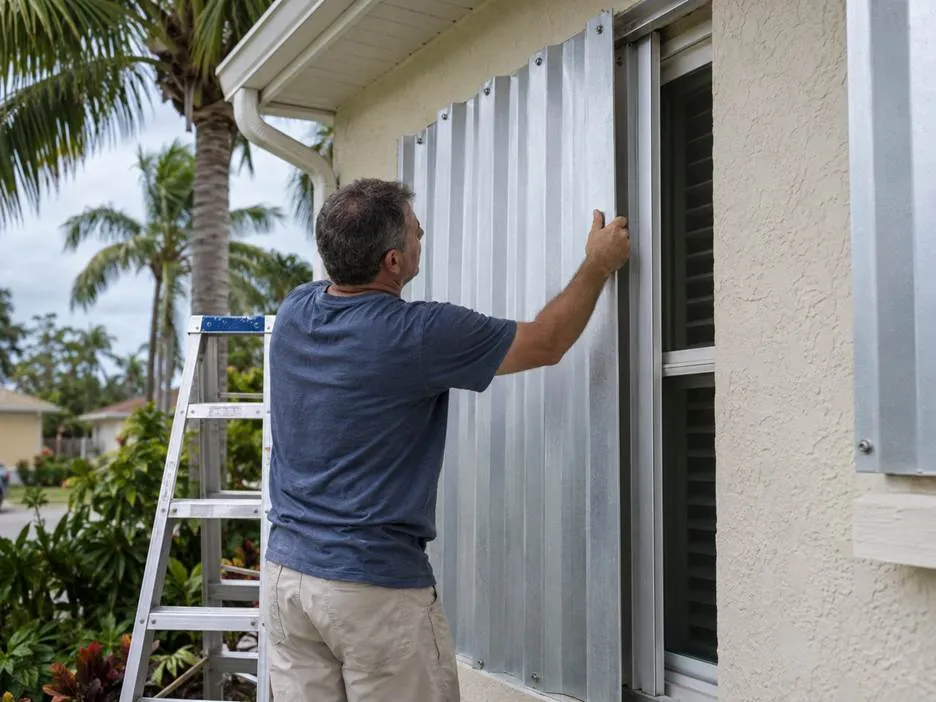
Five types of hurricane shutters are commonly installed on Florida homes.
Fabric hurricane screens are another option, especially for lanais, porches, and wide patio openings. They are made from a high-strength woven fabric that stops wind-borne debris while letting filtered light through, and they are lighter to handle than metal panels. Like any shutter, a hurricane screen needs a Florida Product Approval for the opening it covers. Learn more about hurricane screens for Florida homes.
Each system balances convenience, cost, appearance, and protection differently. The sections below break down where each type performs best.

When comparing accordion vs roll down hurricane shutters, both are permanent systems that deploy quickly and protect a wide range of openings. Accordion shutters fold from tracks beside the opening, while roll-down shutters lower from a housing box above it.
Accordion shutters latch closed by hand and need no tools, ladders, or electricity, but their tracks remain visible when the shutters are open. Roll-down shutters store out of sight in their housing and can be motorized for push-button operation, though a motor needs power or a battery backup during an outage.
Both systems need occasional cleaning, lubrication, and inspection, and motorized roll-downs may also need motor service over time. Accordion shutters work well for large openings and sliding glass doors, while roll-down shutters suit homeowners who want easier operation and a cleaner exterior.
Choose accordion shutters for simple, dependable protection without relying on electricity. Choose motorized roll-down shutters if easier operation and a cleaner exterior look matter more to you.
Ready to Compare Shutter Options for Your Home? Mr. Build has installed hurricane shutters across Sarasota, Bradenton, Venice, and Lakewood Ranch since 1976. Request a free quote, and we will walk you through the options that fit your home and openings. |

For homeowners comparing Colonial vs. Bahama hurricane shutters, both can protect windows and add style. The main differences are how they open, how much shade they provide, and the look they create. Both can meet Florida storm protection requirements with the proper approval and proper installation.
Bahama shutters are hinged at the top and stay angled outward when open. This provides shade and allows airflow. Before a storm, they swing down and latch over the window.
They work well on sunny windows and are popular on coastal homes because of their tropical look. Bahama shutters work best on standard windows and aren’t a good fit for large openings or sliding glass doors.
Colonial shutters are hinged on both sides of the window. They stay open against the wall and swing inward to close over the window before a storm.
They have a more traditional look and work well with Colonial, cottage, and Mediterranean-style homes. Like Bahama shutters, they suit standard-sized windows better than wide openings.
For year-round shade, Bahama shutters are usually the better choice. If you prefer a more traditional appearance, Colonial shutters may be a better fit.
Where Do Board and Batten Hurricane Shutters Fit?
Board and batten hurricane shutters are a Colonial shutter style with solid vertical panels and horizontal or diagonal supports. They offer a more solid, traditional look than louvered shutters.
Some are hurricane-rated, while others are decorative only. Homeowners should confirm that the specific product is approved for storm protection before relying on it during a hurricane.

Choosing the best hurricane shutters for Florida homes means looking beyond storm protection. When comparing hurricane shutters for Gulf Coast homes, homeowners should also consider salt air, corrosion, opening size, ease of use, and how quickly they can close the shutters before a storm. Every approved shutter is built to keep wind-borne debris out of your openings.
Salt air can accelerate corrosion of aluminum and steel parts. In coastal areas, look for durable materials and corrosion-resistant finishes. Ask your installer which products suit Gulf Coast conditions best.
Homes in Sarasota, Bradenton, Venice, and Lakewood Ranch may need storm protection more than once during an active hurricane season, and closing shutters is one of the first items on any hurricane prep checklist. For that reason, many homeowners prefer shutters they can close quickly without ladders, tools, or stored panels.
Accordion shutters are a practical choice for many Gulf Coast homes because they stay mounted and are easy to close. Motorized roll-down shutters are another good option for homeowners who want push-button operation and a cleaner exterior look.
Storm panels can provide approved protection at a lower cost, but they require storage and take longer to install. Bahama and Colonial shutters work best on standard-sized windows and are often chosen for their appearance and storm protection.
Florida hurricane shutters should meet your home’s and your local jurisdiction’s approval requirements. A licensed installer can confirm which products are appropriate for your openings. See our hurricane shutter installation page for more information about the systems Mr. Build installs.
Florida Product ApprovalA Florida Product Approval confirms that a hurricane shutter meets the applicable requirements of the Florida Building Code for use in the state. For homeowners in Southwest Florida, this is the primary approval used for permitting hurricane shutters. Ask your installer for the product’s Florida Product Approval number before installation to confirm it is approved for your home and local jurisdiction. |
Several practical factors should guide your decision before committing to a shutter type.
Florida product approval. Every shutter installed in Florida should carry a Florida Product Approval number or Miami-Dade Notice of Acceptance. These approvals confirm the product meets the wind-load and design-pressure requirements of the Florida Building Code. Ask your installer for documentation before work begins.
Opening size. Large openings, sliding glass doors, and wide patio spans limit your options. Accordion and roll-down shutters are usually the most practical choices for wide spans. Bahama and Colonial shutters suit standard-width windows.
Deployment time. Accordion and roll-down shutters close quickly because they stay mounted on the home. Storm panels take significantly longer, particularly on a larger home with many openings.
Maintenance expectations. Track-mounted systems need regular lubrication. Motorized roll-downs require occasional motor servicing. Panel systems need dry storage between seasons to minimize corrosion.
Appearance. Accordion hardware is visible on the exterior year-round. Roll-down housing is more compact and discreet. Bahama and Colonial shutters add visual interest when open. Storm panels are stored out of sight until needed.
Manual vs. motorized operation. Motorized roll-down shutters offer the most convenience but cost more. Accordion shutters deploy quickly without any electrical component. Storm panels require the most physical effort to install. If you are weighing convenience against cost, our breakdown of whether hurricane shutters are worth it can help.
Installer experience. Florida shutter installation requires permits, product-approval documentation, and proper structural attachment. A licensed contractor familiar with local permitting and wind-load requirements is key to a code-compliant result. Before you schedule an estimate, it helps to know how hurricane shutter installation works.
Both hurricane shutters and impact windows can meet Florida building code requirements for storm protection. The right choice depends on budget, the types of openings involved, and your long-term goals for the home.
Impact windows are permanently glazed and require no deployment before a storm. They also reduce outside noise and can improve year-round energy efficiency. Hurricane shutters protect the existing window beneath and can be left open during clear weather, which some homeowners prefer for ventilation and light.
Some homeowners install both: impact-rated windows in standard openings and shutters on large patio doors or wide spans where impact glass is more complex or costly.
Because this comparison involves two different product categories with distinct costs and installation paths, it is worth a closer look before you decide. Our guide to hurricane shutters vs impact windows compares both options in more detail.
Choosing the right shutter for your home depends on your openings, storm-prep habits, and priorities for appearance and convenience.
Accordion shutters are one of the most common hurricane shutters in Southwest Florida for practical reasons. They are permanently mounted, fast to deploy, and available in configurations that fit most opening sizes. Roll-down shutters offer similar protection, with motorized control and a lower exterior profile. Both are solid long-term investments for homeowners who want protection ready when a storm approaches.
Bahama and Colonial shutters add curb appeal and meet code requirements for standard windows when properly rated and installed. Storm panels offer an approved, more budget-friendly way to add hurricane protection. Shutters are often part of a larger plan, so it helps to review other hurricane-resistant upgrades for Florida homes at the same time.
A licensed installer in Southwest Florida can inspect your home, measure your openings, and recommend products approved and appropriate for your situation.