
Whether you need impact windows in Florida depends on your home’s location, the scope of your project, and local permitting requirements. Homes in wind-borne debris regions must have approved opening protection, but impact windows are one of several qualifying options.
Approved hurricane shutters or storm panels installed over non-impact glass may satisfy the same requirement. Confirm with your local building department what applies to your specific address before starting any window project.
If you’re replacing windows or adding a new opening, local permitting rules determine what’s required for your specific property.
Florida doesn’t require every homeowner to install impact windows. The requirement depends on a combination of your location, the scope of your project, and which code edition governs your permit.
The Florida Building Code designates wind-borne debris regions based on design wind speeds that apply to a given location. Homes within these regions must have approved opening protection for all glazed openings. The precise boundary of a wind-borne debris region is determined by your property’s mapped design wind speed, which your local building department can confirm.
For new construction within a wind-borne debris region, opening protection is required by code. That protection can come from impact-rated windows and doors, from an approved combination of non-impact glazing and storm shutters, or from other product-approved opening protection systems.
For existing homes, requirements depend on what type of work triggers a permit. A full window replacement that requires a permit means your new windows must meet current code standards. Minor repairs or cosmetic updates may fall under different rules depending on your county. Confirm with your local building department before starting any window project.
Impact windows aren’t the only way to meet the opening protection requirement. Approved storm shutters, hurricane screens, and storm panels can protect non-impact windows and satisfy the same code section when the products carry a valid Florida Product Approval and the installation is permitted and inspected.

An impact-resistant window is a tested assembly designed to withstand hurricane-force winds and resist penetration by wind-driven debris. A standard non-impact window is not. The difference extends to the entire window system.
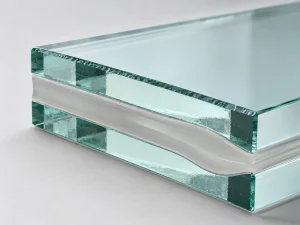
Impact window glass is laminated: two or more panes bonded around a strong interlayer, a polyvinyl butyral (PVB) film or a similar high-performance material. If struck, the glass may crack, but the interlayer holds the broken pieces together and keeps the opening sealed. This is similar to how automotive windshield glass works.
Standard windows typically use annealed or tempered glass that shatters on impact. Tempered glass alone does not make a window impact-rated. The interlayer is what makes the critical difference.
The frame and anchoring method are just as important as the glass. An impact-rated window is tested and approved as a complete assembly. The frame must transfer wind and debris loads into the surrounding structure. Swapping impact glass into a non-impact frame does not produce an impact-rated window. The entire assembly must carry a valid product approval for the specific installation conditions.
Impact windows carry design pressure (DP) ratings measured in pounds per square foot. These ratings reflect how much positive pressure (wind pushing in) and negative pressure (suction pulling out) the window can handle. A window’s DP rating must meet or exceed what’s required for your home’s location and exposure category.
Beyond storm performance, laminated impact glass significantly reduces outside noise, which is a real advantage for homes near busy roads or flight paths. The interlayer also blocks a substantial portion of UV radiation, which helps protect interior furnishings from fading. Because the glass is difficult to break through quickly, impact windows also deter forced entry more effectively than standard glazing.

For homes in Mr. Build’s Southwest Florida service area, Florida Product Approval is the primary product approval used for permitting impact-resistant windows. A valid Florida Product Approval number (FL#) shows that the window has been approved for use under applicable Florida Building Code requirements.
Before any work begins, ask for the Florida Product Approval number and verify it through the Florida Building Product Approval database at floridabuilding.org. The approval should cover the specific product, the size range being installed, and the installation conditions at your home.
Design pressure ratings indicate how much wind load a window assembly is rated to withstand. Homes closer to the coast, at greater heights, or in open exposure conditions generally require higher DP ratings than homes farther inland.
A licensed contractor should calculate the minimum design pressure required for each opening based on your home’s location, height, roof geometry, and exposure category. Installing a window with a DP rating below what’s required for your conditions is a code violation and may also create problems with your insurance carrier.
The interlayer type and glass configuration affect more than storm performance. Ask about the solar heat gain coefficient (SHGC), which measures how much solar heat passes through the glass. A lower SHGC means less heat entering the home, which matters in Southwest Florida where summer heat load on air conditioning systems is significant.
Ask about the acoustic performance of the glass package as well. Thicker glass units and better interlayer materials generally deliver more meaningful noise reduction, which many homeowners notice immediately after installation.
Impact window frames are most commonly aluminum, vinyl, or fiberglass, and each has real trade-offs.
Aluminum frames are strong and hold up well in coastal conditions. Standard aluminum conducts heat, but thermally broken aluminum frames address that issue. Vinyl frames offer good thermal performance and low maintenance but can be less rigid at larger window sizes. Fiberglass frames are dimensionally stable, thermally efficient, and strong, but typically cost more than aluminum or vinyl.
The installation itself matters as much as the product. Proper anchoring, weather-resistive barrier integration, flashing, and sealing are all part of a correct installation. An impact-rated window installed incorrectly can fail at loads well below its rated capacity.

Yes, and sometimes there’s a big difference. Design wind speeds, wind-borne debris region boundaries, and local permitting requirements vary across the state. Even within the same county, properties in different exposure categories may face different minimum requirements.
In Southwest Florida, Gulf Coast proximity means many communities fall within wind-borne debris regions. Homes along the coast in Sarasota or on barrier islands like Longboat Key and Siesta Key face coastal exposure conditions where design wind speeds and salt air corrosion are both real considerations. Properties farther inland, in areas like Parrish or Lakewood Ranch, may have lower design wind speed requirements, though they still need to meet the applicable standards for their location.
Local jurisdictions can also adopt amendments that go beyond the state minimum. Sarasota County, Manatee County, and Charlotte County may have differing requirements, and individual municipalities can add their own conditions. Homeowners in Port Charlotte should confirm what applies to their specific property with the local building department.
Not necessarily. If your existing shutters or storm panels carry a current Florida Product Approval and are properly installed over your current windows, that combination can satisfy opening protection requirements without impact glazing.
The practical difference is preparation. Impact windows are always in place, while shutters and panels must be deployed before a storm. For homeowners who travel during hurricane season or prefer protection that does not depend on being home, impact windows may be more convenient.
Both approaches can meet code requirements in many situations. The right choice depends on your home, your budget, and how you prefer to manage storm preparation.
If you want more options to consider, review hurricane shutter and screen options for Southwest Florida to see which type of protection may fit your home best.
A contractor needs to evaluate several conditions specific to your home before recommending products.
The size and configuration of your current openings, the framing material surrounding them, and the condition of the rough opening all affect which products can be correctly installed. Some older Southwest Florida homes were built with openings that need modification before a code-compliant impact window can be properly anchored.
Not every Florida-approved impact window is approved for every exposure condition. A product tested to a lower design wind speed may not be appropriate for a coastal home that requires a higher rating. The contractor should confirm that the specific product, in the exact size being ordered, carries an approval that covers your home’s wind exposure requirements.
Permit requirements vary by municipality. A licensed contractor who regularly works in Sarasota, Bradenton, Venice, or the surrounding communities will know the local permitting process, can help avoid inspection delays, and can provide documentation that may be useful for a wind mitigation inspection or an insurance review.
Impact windows can provide permanent storm protection, but the right choice depends on your home’s location, opening sizes, design pressure requirements, and local permitting rules. In Southwest Florida, choosing products with the correct Florida Product Approval and having them installed properly are both essential. A licensed local contractor can help confirm what your home needs and guide you through product selection, permitting, and installation.